Find out whether you can file for bankruptcy as a married couple in a joint bankruptcy and the consequences of one spouse filing alone.
Updated 5/23/2024
Why Trust Us?
Fact-Checked
Nolo was born in 1971 as a publisher of self-help legal books. Guided by the motto “law for all,” our attorney authors and editors have been explaining the law to everyday people ever since. Learn more about our history and our editorial standards.
Each article that we publish has been written or reviewed by one of our editors, who together have over 100 years of experience practicing law. We strive to keep our information current as laws change. Learn more about our editorial standards.
Married couples can file together in a joint bankruptcy that combines the spouses' property and debts into the same case. In this article, you'll learn about factors to consider when determining whether an individual or joint filing makes more sense.
Do Both Spouses Need to File for Bankruptcy?
No. Although filing a joint bankruptcy is often the right move, spouses aren't required to file as a unit. Ultimately, your decision will depend on which option allows you to discharge more of your debts and keep more of your property.
When Will One Spouse File for Bankruptcy?
It's not uncommon for a spouse who comes into a marriage with outstanding bills to file individually and keep the debt-free partner out of bankruptcy court. This is especially true if it will allow the non-filing spouse to retain a good credit rating because a bankruptcy filing remains on a credit report for up to ten years.
Which Debts Do You Want to Wipe Out?
Getting rid of debt is one of the foremost concerns when deciding whether to file a joint bankruptcy with your spouse. When you share many of the same obligations, filing a joint bankruptcy is usually the better option. You can wipe out all the dischargeable debts you both owe and your individual debts through a joint bankruptcy.
On the other hand, if you have few or no joint debts and your spouse has a lot of individual debts, the better course might be to let your spouse file alone. Besides saving the credit rating of one partner, you'll retain the option of filing for bankruptcy later on if necessary.
The downside? If only one spouse files, the non-filing spouse will still be responsible for their debts and any joint debts, depending on the state they live in
Special Note for Community Property State Residents: The calculation might differ if you live in one of the few community property states. In many of these states, community debts are discharged even if only one spouse files for bankruptcy, and discharged creditors cannot go after any community property so long as both spouses are alive and still married (known as a "phantom discharge" because the non-filing spouse also receives protection even though he or she did not receive a discharge).
Conversely, you might lose more property in these states if you file individually (see below). To learn whether you live in a community property state, see Separate and Community Property During Marriage: Who Owns What?
How Much Property Do You Both Own?
When you file jointly, you'll include all assets and property in the bankruptcy (community and separate property). You'll need to have enough bankruptcy exemptions to protect your property, but if you live in a state that allows married couples filing jointly to double exemptions, you can keep more of your property.
If one spouse files for bankruptcy, how the other spouse's separate property and the community property will be affected varies. Find out the law in your state or consult a local bankruptcy attorney before you file.
To learn more about bankruptcy exemptions and how they protect your property in bankruptcy, see Bankruptcy Exemptions by State.
Property Held as Tenancy by the Entirety
Tenancy by the entirety is property jointly owned by a married couple as a single marital entity, not as two individuals. Some states exclude property held as tenancy by the entirety from the bankruptcy estate if only one spouse files.
If you live in one of these states and you hold your home or another large piece of property as tenancy by the entirety, you might be able to protect the home or property if only one spouse files for bankruptcy. If you file jointly and the homestead exemption doesn't cover your equity, you might lose your home.
Bankruptcy Costs
Filing for bankruptcy usually involves paying a filing fee to the court and paying an attorney if you decide to hire one. You can save a substantial amount of money by filing a joint bankruptcy with your spouse rather than two individual bankruptcies.
The court filing fees are the same for both individual and joint bankruptcies. Also, attorney fees for a joint bankruptcy are usually much cheaper than two bankruptcies. In many cases, filing a joint bankruptcy will cost the same amount as filing one case.
Convenience
When you file bankruptcy, you must provide significant financial information to the court and the bankruptcy trustee. You must also go to at least one hearing before the trustee known as the 341 meeting of creditors. If you file a joint bankruptcy with your spouse, you'll go to the hearing together and provide only one set of documents. As a result, filing jointly with your spouse is usually more efficient and convenient than separate filings.
Effect on Your Credit
If you file a joint bankruptcy, it will be reflected on your credit reports. Even though bankruptcy hurts your credit initially, most people's credit scores tend to increase shortly after. However, if you have good credit and your spouse needs to file bankruptcy primarily for his or her own debts, then it wouldn't be in your best interest to file jointly and take the hit to your credit.
To learn more about fixing your credit after a bankruptcy, check out Credit Repair for Bad Credit.
DIY Legal Tools from Nolo
Book & eBook
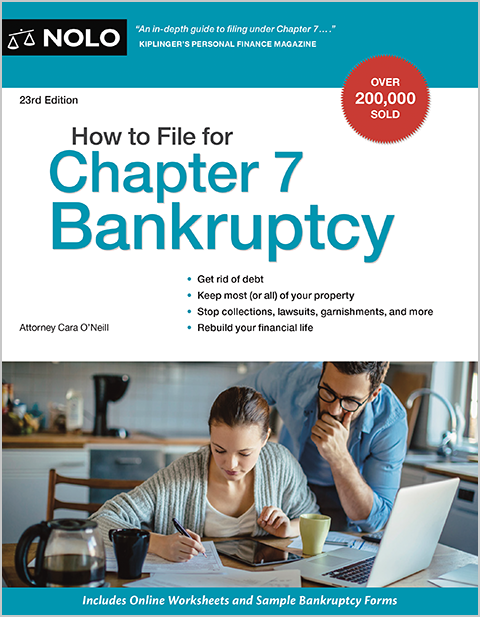
How to File for Chapter 7 Bankruptcy
Book & eBook
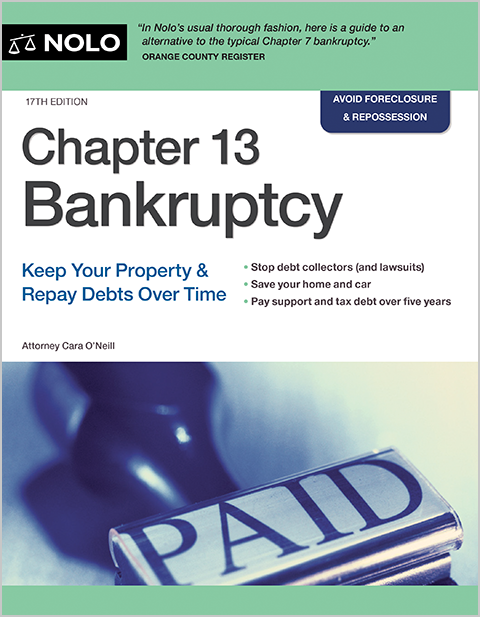
Chapter 13 Bankruptcy

Copyright ©2025 MH Sub I, LLC dba Nolo ® Self-help services may not be permitted in all states. The information provided on this site is not legal advice, does not constitute a lawyer referral service, and no attorney-client or confidential relationship is or will be formed by use of the site. The attorney listings on this site are paid attorney advertising. In some states, the information on this website may be considered a lawyer referral service. Please reference the Terms of Use and the Supplemental Terms for specific information related to your state. Your use of this website constitutes acceptance of the Terms of Use, Supplemental Terms, Privacy Policy, Cookie Policy, and Consumer Health Data Notice.
Your Privacy Choices