Learn where to find the official bankruptcy forms, how to complete them, and where to file the forms you'll need to start your bankruptcy case.
Updated 8/01/2025
Why Trust Us?
Fact-Checked
Nolo was born in 1971 as a publisher of self-help legal books. Guided by the motto “law for all,” our attorney authors and editors have been explaining the law to everyday people ever since. Learn more about our history and our editorial standards.
Each article that we publish has been written or reviewed by one of our editors, who together have over 100 years of experience practicing law. We strive to keep our information current as laws change. Learn more about our editorial standards.
Getting bankruptcy forms is simple--you'll find them online on the U.S. Courts Bankruptcy Forms webpage. However, that's the easy part. Learning which forms you must use and completing the bankruptcy packet for filing takes time because it involves disclosing every aspect of your financial condition. But completing bankruptcy paperwork doesn't need to feel overwhelming, and this practical guide to getting and filing bankruptcy forms can help.
We explain the purpose of the voluntary petition, supporting schedules, and other forms that you must file, and provide instructions on the filing process from start to finish. We also provide you with tips to help you on your way to a fresh financial start.
Where Can I Get Bankruptcy Forms?
To find the forms, you'll head over to the official U.S. Courts Bankruptcy Forms webpage (www.uscourts.gov/forms-rules/forms/bankruptcy-forms). All of the bankruptcy forms are listed there on a single page and organized by form name and number. You can download each fillable form before completing, saving, and printing it for filing.
Can I File for Bankruptcy on My Own and Complete the Bankruptcy Forms Myself?
Of course! Many people have completed their bankruptcy forms without assistance, and you can too. A good place to start is by reviewing the forms themselves and familiarizing yourself with the information needed.
When you get started, don't be alarmed by the number of bankruptcy forms required. The trustee responsible for your case needs a lot of information to evaluate whether you can repay creditors in exchange for the debt discharge that eliminates your qualifying debt. It's easier to assess your financial condition by looking at it in small, distinct parts.
Bankruptcy Forms All Individuals File
Because the U.S. Courts doesn't organize the forms by chapter or specifically explain when each should be used, it can be challenging to know which forms you'll need. To help, you'll find a list of the forms that every individual Chapter 7 and Chapter 13 debtor must file, along with the form number and a brief description of its purpose.
Caution. Always use the official forms located on the U.S. Courts site. Forms obtained elsewhere could be inaccurate or out of date.
Voluntary Petition for Individuals Filing for Bankruptcy (Form 101). This is the cover sheet for your paperwork. It requires your name, address, social security number, the name of any businesses you own, the bankruptcy chapter you intend to file, how you plan to pay the filing fee, whether you've filed for bankruptcy within the last eight years, your home rental status, whether you own any hazardous property, and whether you've completed your credit counseling course. You'll include the completion certificate with the petition. If filing a joint petition, you'll also include your spouse's information.
Declaration About an Individual Debtor's Schedules (Form 106 Declaration). On this form, you'll attest to the accuracy of the information provided in your forms. Knowingly supplying incorrect information or failing to disclose fully is punishable by up to $250,000, 20 years in prison, or both. Complete and sign this form last.
A Summary of Your Assets and Liabilities and Certain Statistical Information (Form 106 Summary). You'll tell the court about your assets, debt, income, expenses, and debt type by transferring totals from your other schedules to this form. Complete this form after the schedules because you'll need to transfer information from them.
Schedule A/B: Property (Form 106A/B). On this form, you'll describe all of the property you own, including real estate, vehicles (cars, vans, trucks, tractors, SUVs, motorcycles, watercraft, aircraft, motor homes, and other recreational vehicles), personal and household items (furnishings, electronics, collectibles, sporting and hobby equipment, firearms, clothing, jewelry, pets), financial assets (bank accounts, cash, retirement accounts, investments), money owed to you (tax refunds, domestic support, loans, inheritance, lawsuits against other people), business and business-related property, and all other assets you own.
Schedule C: The Property You Claim as Exempt (Form 106C). You'll list the law that allows you to keep particular assets on this schedule. You'll find the applicable law in your state's exemption statutes.
Schedule D: Creditors Who Have Claims Secured by Property (Form 106D). This form is for listing secured bankruptcy claims, where your creditor has the right to take property (collateral) if you fall behind on your payments. Common examples include car loans and mortgages.
Schedule E/F: Creditors Who Have Unsecured Claims (Form 106E/F). You'll list your remaining debt on this schedule, including priority claims such as child and spousal support, taxes, obligations to the government, and claims for death or personal injury that occurred while you were intoxicated. You'll also list credit card balances, medical bills, personal loans, utility bills, and any other debt you might have. You can't exclude an obligation for any reason. You must report all your creditors in your bankruptcy case, no matter the circumstances. This rule prevents favoring one creditor over another. If funds are available for creditors, the bankruptcy trustee will disperse the money according to the priority of the debt. Omitting a creditor could leave you responsible for the debt after your bankruptcy case, and intentionally defrauding a creditor could result in a fine of up to $250,000, 20 years in prison, or both.
Schedule G: Executory Contracts and Unexpired Leases (Form 106G). If you're in a contract that hasn't expired yet, such as a gym membership or an equipment rental agreement, you'll include it on this form.
Schedule H: Your Codebtors (Form 106H). On this form, you'll list any codebtors—individuals who must pay your debt if you fail to do so. Common codebtors include car loan cosigners and joint credit cardholders.
Schedule I: Your Income (Form 106I). This is where you disclose your income and employment information. If you're married but filing for bankruptcy without your spouse, you'll include your spouse's income unless you're separated (consult a bankruptcy attorney for this complicated area).
Schedule J: Your Expenses (Form 106J). On this form, you'll list your monthly expenditures. You'll deduct your expenses from the Schedule I net income amount to determine your monthly disposable income. If you file for Chapter 7 and have significant disposable income, the judge might find you can pay your creditors something in Chapter 13.
Statement of Financial Affairs for Individuals Filing for Bankruptcy (Form 107). You'll tell the court about your prior financial situation and transactions on this form. For instance, you'll disclose your gross income for the last two full years (as well as the year-to-date amount), recent payments to creditors, active lawsuits, safe-deposit boxes and storage spaces, prior foreclosures and repossessions, property transfers, property you're borrowing or holding for someone else, bank account closures, and business information.
Statement About Your Social Security Numbers (Form 121). You'll provide your Social Security number on this form (it won't be available to the public).
Other Required Bankruptcy Forms for Chapters 7 and 13
If you thought that would be all you needed to prepare, it's not the case. But you're almost done. The list isn't complete because Chapters 7 and 13 each have forms unique to the particular chapter. For instance, the means test forms necessary to qualify for Chapters 7 and 13 are different. Also, in Chapter 13, you must file a repayment plan outlining how you intend to repay creditors over three to five years.
For a complete list of Chapter 7 forms, see Forms You Must File in Chapter 7 Bankruptcy. A comprehensive list of Chapter 13 forms can be found in Forms You Must File in Chapter 13 Bankruptcy.
Local Bankruptcy Forms and Requirements
It's not uncommon for your local bankruptcy court to require you to file local forms or have special filing requirements or rules. For instance, many bankruptcy courts require filers to use a local Chapter 13 plan form instead of the plan form found on the U.S. Courts webpage.
You can get local bankruptcy form information and a copy of the local rules from the bankruptcy court clerk or your local bankruptcy court's website. Many court websites provide guidelines on the navigation bar under "Forms" or "Filing Without an Attorney."
Step-By-Step Filing Instructions
Preparing and filing the official and local forms with the bankruptcy court is the next step. This overview breaks down what's involved and explains the basics of what you can expect (although keep in mind that processes vary by court). Extensive details and helpful tips for each topic follow.
- Gather documents. Find pay stubs, tax returns, bank statements, bills, and other documents needed to complete the petition. Get a copy of your credit report. Make a list of your property. Find a current list of your state's property exemptions.
- Get the correct bankruptcy forms. You can find all official bankruptcy forms on the U.S. Courts webpage. Use the forms for individuals, not the non-individual forms. Verify that you have all the forms necessary for Chapter 7 or 13, depending on the chapter filed.
- Complete the forms. Find a bankruptcy preparer service if you need help organizing documents, understanding the instructions, and filling out the forms.
- Review, print, and sign the forms. Ensure they're accurate and complete before signing.
- Print and assemble copies. Your court will likely require the original plus two or three copies, and to assemble them, possibly using paperclips, in a particular order. Follow the instructions to avoid filing delays.
- File the completed petition. Determine whether your court requires filing in person, by mail, or through a court dropbox. Online filing is typically limited to attorneys.
- Pay the filing fee. You'll find the amount and payment options on the court's website. File a fee waiver or installment plan request if you can't afford to pay the Chapter 7 fee.
- Stop collection actions. Immediately notify creditors if you need a collection action, foreclosure, or eviction to stop by providing them with the case number assigned by the clerk, the filing date, and the court name in writing.
- File outstanding forms and documents. File any forms you might not have filed with the petition, such as a Chapter 13 plan, Statement of Intention form, or all forms outstanding due to using the emergency filing procedure. Forward bank statements, paycheck stubs, tax returns, and other verifying financials ("521" documents) to the trustee assigned to your case, or file with the court, depending on your jurisdiction.
Preparing to Complete the Bankruptcy Forms
Completing the official bankruptcy paperwork is relatively straightforward. At the top of each form, you'll find instructions written in clear, direct language. Below you'll find additional guidance you'll likely find helpful.
Know the Law
Because the forms don't explain the consequences of the information you provide, you're responsible for understanding what will happen to your debts and property. Be sure that you have a good grasp of bankruptcy law before you file. Especially important is whether you'll be able to protect your property with bankruptcy exemptions and whether your debts will qualify for a discharge. If you're unsure, consult a bankruptcy attorney.
Caution. Filing for bankruptcy requires a thorough and complete understanding of bankruptcy law. Failing to understand the consequences could result in property loss or a criminal investigation. Do not proceed without consulting a qualified bankruptcy lawyer if you're unclear about the law or process.
Gather Documents Needed to Complete the Forms
Completing the forms takes time. But just as time-intensive—if not more so—is gathering the documents needed to complete them. For instance, you'll need the following:
- pay advice and paycheck stubs
- bank, retirement, and investment statements
- up to four years of tax returns
- current mortgage and car loan statements
- home and vehicle valuations
- property list
- copies of driver's license or identification card and Social Security card
- accountant or bookkeeper's name and contact information, and
- marital settlement dissolution if recently divorced.
The particulars will depend on whether you file for Chapter 7 or 13, and your trustee. If you own a business, plan to prepare monthly and yearly profit and loss statements if they aren't already completed (they aren't difficult to create). The trustee might also want customer lists, outstanding invoices, accounts receivable, and proof of liability insurance.
Get more details in Gathering Your Documents for Bankruptcy.
Choose the Correct Bankruptcy Forms
On the bankruptcy form webpage, you'll find two almost identical sets of bankruptcy forms. If you're filing for bankruptcy in your name, you'll use the 100-series individual forms (this includes sole proprietors). Partnerships and corporations use the 200-series non-individual forms. If you're not sure if you're using the correct set, check the title. Whether it's for individual or non-individual use will be indicated at the end.
Find Bankruptcy Form Preparation Tools and Services
If you'd like assistance, consider looking into bankruptcy preparer services. These services can be of tremendous help if you find yourself overwhelmed by paperwork, and can be lifesavers when it comes to organizing financial documents if you're the type who tosses them into a shoebox.
Check for preparation services online and through local legal offices. You'll want to look for someone who, in addition to helping you organize your paperwork, will help you:
- verify that you have the necessary financial documents
- review the form questions and requirements
- input the information in a neat, consistent manner, and
- ensure all required forms are ready to be printed, signed, and filed.
The services are limited, however. You'll be responsible for disclosing all required information transparently, properly filing the forms, and the outcome of your case. To ensure you hire a reputable service, research their credentials and check for complaints with the local bar association.
Caution. Bankruptcy preparers are prohibited from explaining bankruptcy law or providing you with legal advice. To avoid jeopardizing your case, seek legal advice from a qualified bankruptcy lawyer.
Filing the Bankruptcy Forms
The final step is filing the forms and paying the required filing fee. Here are the details.
Find the Bankruptcy Court
Bankruptcy falls under federal law, so you'll file in federal bankruptcy court, not your local state court. Federal bankruptcy courts are all over the country and divided into judicial districts, with every state having at least one judicial district, but most have more.
The Federal Court Finder tool can help you find the bankruptcy court closest to you, along with its website. You must file in the federal district in which you've lived for the majority of the prior 180 days, so check the website to ensure you're filing in the right place. You might have additional filing options if you own a business, have substantial assets somewhere other than where you live, or don't have a permanent residence. In these situations, consult a local bankruptcy attorney or Legal Aid center.
You'll find more specifics in Bankruptcy Information for Your State.
Determine How to File Bankruptcy Forms
If you represent yourself, check the court's website for filing instructions and to find out whether you should file the bankruptcy forms in person, by mail, or through a court dropbox. Some courts might have a pilot project that allows debtors to file electronically, but such programs are rare.
You'll also want to find out how many copies you'll need to file along with the original, the order the forms should be in, and other requirements, such as whether you should staple, hole-punch, or paperclip your documents, and if you'll need to include a stamped, self-addressed return envelope.
If a bankruptcy lawyer represents you, your attorney will prepare the bankruptcy petition for your review and signature before filing it electronically with the court.
The Filing Fee
Expect to pay a fee of $338 when filing for Chapter 7 and $313 for Chapter 13 (as of August 2025; amounts change periodically). Check your court's website to determine how they accept payment. If you can't afford the Chapter 7 fee, you can file a form to request a fee waiver or to pay the fee in installments (usually four).
In many instances, the bankruptcy court will automatically set an installment plan if you don't qualify for the fee waiver. Just be sure to make all payments promptly. If you don't, the court will dismiss your case without granting an order erasing your debts (discharge). Failing to make timely payments will be costly because you'll need to repay the filing fee to open the case and ask the court to issue the discharge.
Don't Forget Outstanding Forms and Documents
Not all forms must be filed along with the Voluntary Petition to start the case. The Chapter 13 plan is an example of a form you might not file initially. Another is the Statement of Intention form, which is used to explain what you plan to do with secured or leased property. For instance, that's the form you use to indicate whether you intend to keep a house or surrender a car in Chapter 7.
Keep in mind that you must remember to file outstanding forms within the time limits allowed. Failing to do so can come with serious consequences, such as case dismissal or the lifting of the automatic stay, which could allow a creditor to foreclose, repossess, or seize your property.
Also, the amount of time you'll have to file outstanding forms varies, so it's crucial to understand the particular form requirements. One of the tightest deadlines is for debtors who use the skeleton petition procedure, as they have only 14 days to file the remaining documents before the court dismisses the action.
Another task you'll want to calendar is that of forwarding financial documents—sometimes called "521" documents after the code section requiring them—to the trustee assigned to your case (although you'll file some with the court in a few jurisdictions). The trustee uses these documents to verify the disclosures made in your paperwork.
To prevent unexpected problems, many bankruptcy lawyers file all forms together, even if additional time is allowed. The only exception would be providing the 521 documents to the trustee. You won't be able to complete this task until you receive the trustee's contact information from the court. Also, the trustee will likely have a list of specific documents that they'd like delivered in a particular manner, such as uploaded into a secure application.
Learn more about the steps involved in a do-it-yourself Chapter 7 filing.
Need More Bankruptcy Help?
Did you know Nolo has made the law accessible for over fifty years? We wholeheartedly encourage research and learning, and you can find many more helpful bankruptcy articles on Nolo's bankruptcy homepage. Additionally, information needed to complete the official downloadable bankruptcy forms is on the Department of Justice U.S. Trustee Program website.
However, online articles and resources can't address all bankruptcy issues and aren't written with the facts of your particular case in mind. The best way to protect your assets in bankruptcy is by hiring a local bankruptcy lawyer.
In This Article
DIY Legal Tools from Nolo
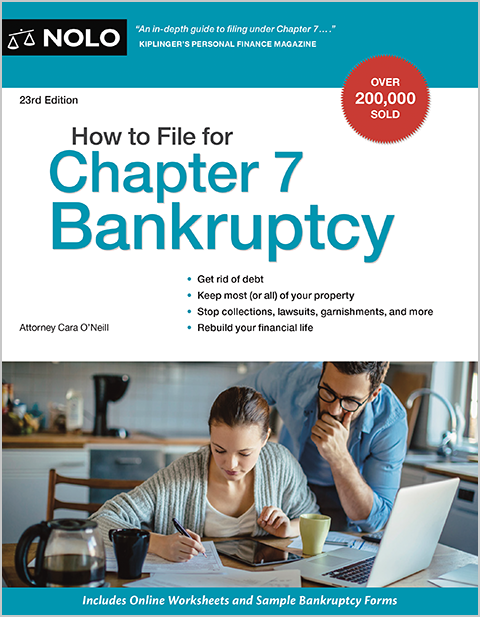
Book & eBook
How to File for Chapter 7 Bankruptcy
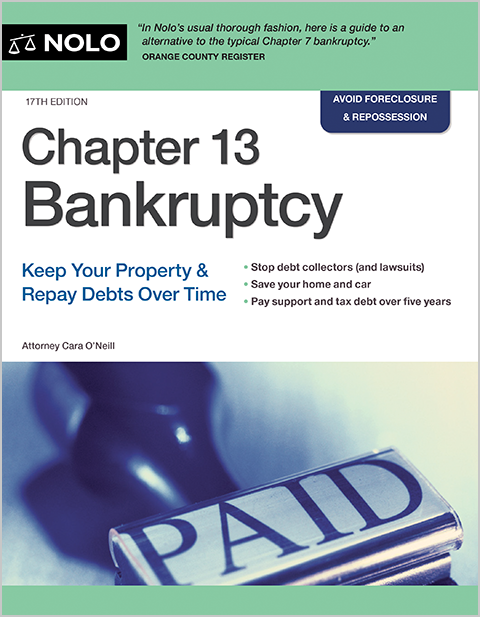
Book & eBook
Chapter 13 Bankruptcy

Copyright ©2025 MH Sub I, LLC dba Nolo ® Self-help services may not be permitted in all states. The information provided on this site is not legal advice, does not constitute a lawyer referral service, and no attorney-client or confidential relationship is or will be formed by use of the site. The attorney listings on this site are paid attorney advertising. In some states, the information on this website may be considered a lawyer referral service. Please reference the Terms of Use and the Supplemental Terms for specific information related to your state. Your use of this website constitutes acceptance of the Terms of Use, Supplemental Terms, Privacy Policy, Cookie Policy, and Consumer Health Data Notice.
Your Privacy Choices