 Copyrighting Your Work
If you created a song, book, photo, painting, website, or just about any other type of creative work then you should understand the basics of copyright law. Learn the principles of copyright registration, the basics of copyright ownership, simple steps to protect software and websites, and many more tips to guarantee your rights in your work.
The creator of a copyrighted work does not always own the copyright to that work. In some cases, an assignment or transfer can "give" other persons or entities ownership of the copyright.
Copyright protection can be useful for artists, writers, and other creators.
Software development agreements are important for clarifying your rights and obligations.
Songwriters are often ill-prepared to handle the many business and legal issues that arise in their work. These issues can be critical for a musician's success.
Learn how to copyright software using Form CO.
Money damages in copyright infringement actions are commonly awarded under three legal theories: actual damages, profits, and statutory damages.
“Joint works” and “collective works” are categories that receive somewhat different treatment than individually created works under the U.S. Copyright Act
May 22, 2017. In Star Athletica, L.L.C. v. Varsity Brands, Inc., the Supreme Court opened the door to greater copyright protection for the fashion industry.
My band is recording an album of cover songs. We know we have to list all of the original writers and owners of the songs, but what else do we need to do before the album is released?
Why self-mailing won't get you the copyright protection you need.
Cartoonists, like all media creators, should take steps to protect their intellectual property.
Software code is protected by copyright, much like other written works. A copyright notice should be used for all distributed software.
If you design a game, what prevents someone else from coming along and copying it?
Empower Yourself: DIY Products by Nolo
Sidestep the lawyers with do-it-yourself books, documents, and software.
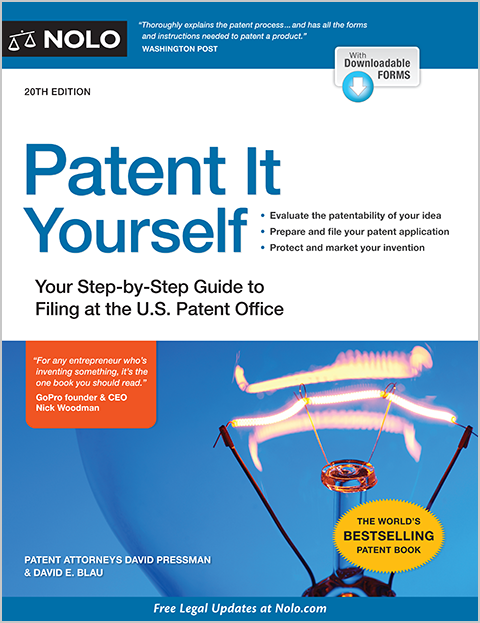
Book
Patent It Yourself
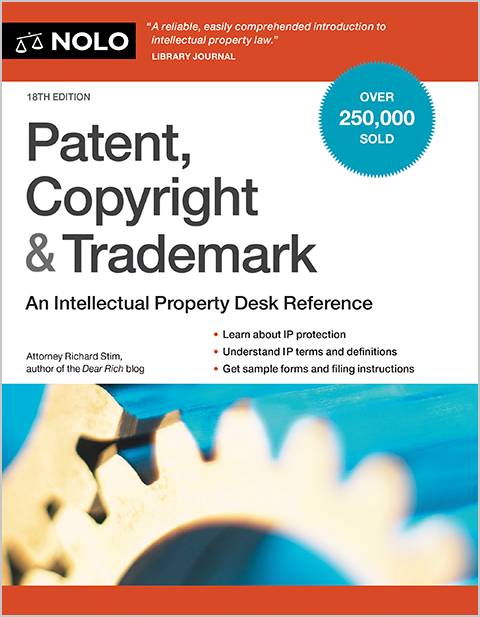
Online Form
Nondisclosure Agreement for Inventors
Online Form
Joint Ownership Agreement for an Invention
Nolo offers hundreds of consumer-friendly, do-it-yourself legal products for all types of legal situations. Browse our full product list.
More Legal Issues
Click below to view more legal issues. Our extensive collection of legal topics ranges across different areas of practice.

Corporations Car Accidents Criminal Law Debt Management Disability Law Divorce & Family Law

Learn About Our Team
Our editors have over 100 years of combined experience practicing law. These professionals have worked in a wide range of legal areas, from estate planning to criminal law to business formation and beyond. They’re experts at explaining complicated legal issues in easy-to-understand terms.
Learn more about the team that manages Nolo’s articles, books, and DIY tools.
Need a Lawyer? We Can Help
Find an experienced, local attorney in three easy steps. Our process is designed for ease and simplicity.
Describe Your Case
Briefly tell us about your case, and provide your contact information.
Get Connected
We find and instantly list attorneys that can best handle your case.
Hire an Attorney
Choose the attorneys you would like to work with.
Nolo Legal Dictionary
Find plain-English definitions for legal terms by browsing Nolo's Law Dictionary.
Are You an Attorney?
Grow your firm with Martindale-Nolo, the largest legal network, and learn more about our attorney lead-generation and marketing services.
Integrity and Expertise You Can Rely On
At Nolo, we prioritize quality and transparency because we know how important reliable legal information is to our readers. Our information is meticulously researched, regularly updated, and written in plain English by our experienced writers and editors. Learn more about our editorial standards.
- Briefly tell us about your case
- Provide your contact information
- Choose attorneys to contact you
Copyright ©2025 MH Sub I, LLC dba Nolo ® Self-help services may not be permitted in all states. The information provided on this site is not legal advice, does not constitute a lawyer referral service, and no attorney-client or confidential relationship is or will be formed by use of the site. The attorney listings on this site are paid attorney advertising. In some states, the information on this website may be considered a lawyer referral service. Please reference the Terms of Use and the Supplemental Terms for specific information related to your state. Your use of this website constitutes acceptance of the Terms of Use, Supplemental Terms, Privacy Policy, Cookie Policy, and Consumer Health Data Notice.
Your Privacy Choices