Before you begin releasing cover albums, consider the implications under U.S. copyright law.
Updated 7/09/2023
Why Trust Us?
Fact-Checked
Nolo was born in 1971 as a publisher of self-help legal books. Guided by the motto “law for all,” our attorney authors and editors have been explaining the law to everyday people ever since. Learn more about our history and our editorial standards.
Each article that we publish has been written or reviewed by one of our editors, who together have over 100 years of experience practicing law. We strive to keep our information current as laws change. Learn more about our editorial standards.
Let's say that your band wants to record an album of cover songs. You know you have to list all of the original writers and owners of the songs, but what else do you need to do before the album is released? Do you need to get a license and pay royalties to anyone?
The short answer is yes: You need to obtain a license pay a fee the copyright owners of the songs. (A song's copyright owner will be the songwriter or, more usually, the music publishing company that published the song). But the copyright owner can't deny you the license, known as a "mechanical license," so long as you pay a fee, known as the "mechanical rate."
In this article, we'll explain what a mechanical license is, how to calculate the fee, and how to obtain the license.
How Mechanical Licenses Allow Licensing for Cover Songs
The songwriter or music publisher has complete control over the original recording of a song. But once the songwriter has made an original recording, or authorized another musician to make an original recording, any musician can make a cover version of it so long as:
- the cover version doesn't deviate substantially from the original
- the musician obtains a license, known as a "mechanical license," and
- the musician pays the associated mechanical license fee.
A mechanical license isn't needed for songs that are in the public domain and not protected by copyright.
What Qualifies as a Cover Version for Mechanical License Purposes?
Here are two examples of cover songs, one that qualifies for the mechanical license and one that doesn't. The key consideration here is how much the cover version strays from the original.
Example 1: Imagine that Fran writes and releases the song "Up the Stairs." Later, Cappy decides she wants to record "Up the Stairs" with a slightly different arrangement but in a way that's fundamentally the same as Fran's original. If Cappy is willing to pay the statutory fee (covered below), she doesn't need to ask Fran for permission—she can move forward with a mechanical license. But if she wants to pay less per copy of her version of the song, she must get permission from Fran and negotiate a lower rate.
Example 2: Suppose Sammy composes and records a country ballad. Later, Pauline, a punk rap star, acquires a compulsory license and records Sammy's song but changes the words and eliminates the melody. Sammy can have Pauline's compulsory license revoked and prevent the recording from being distributed further or played. As explained above, the compulsory license doesn't apply to substantial deviations from the original song. (Pauline should have gotten permission from Sammy to use the song in this way.)
What Is the Mechanical License Fee for Cover Songs?
The mechanical license fee is based on the "statutory rate" or the "mechanical rate," which is set by the Copyright Royalty Board (CRB) of the U.S. Copyright Office. The fee from January 1, 2023 through December 31, 2027 is:
- For physical records (such as CDs or vinyl records) and permanent digital downloads, the greater of 12 cents per track or 2.31 cents per minute of playing time.
- For streaming, 15.1-15.35% of revenue.
The mechanical royalty is based on the number of recordings produced, not the number ultimately sold.
How to Obtain a Mechanical License for a Cover Song
There are two ways to obtain a mechanical license and pay the royalty:
- License directly from the original song's copyright owner (usually the music publisher). In this arrangement, the two sides typically negotiate a special fee for the license.
- License through an authorized mechanical license agency or distributor, such as Distrokid, CD Baby, or the Harry Fox Agency's Songfile service (for up to 2,500 copies).
Direct licensing isn't common for independent musicians (those not signed with a record label). Independent musicians generally obtain mechanical licenses from the kinds of intermediary services noted above.
Additional Resources
You can get helpful information about mechanical licensing from Copyright Office Circular 73, Compulsory License for Making and Distributing Phonorecords. If you want to learn more about music law generally, read Nolo's Music Law: How to Run Your Band's Business by Richard Stim.
Talk to a Lawyer
Need a lawyer? Start here.
How it Works
- Briefly tell us about your case
- Provide your contact information
- Choose attorneys to contact you
DIY Legal Tools from Nolo
Book & eBook
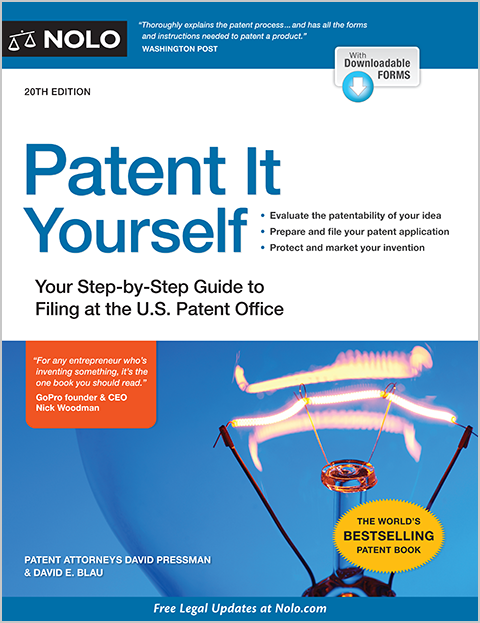
Patent It Yourself
Book & eBook
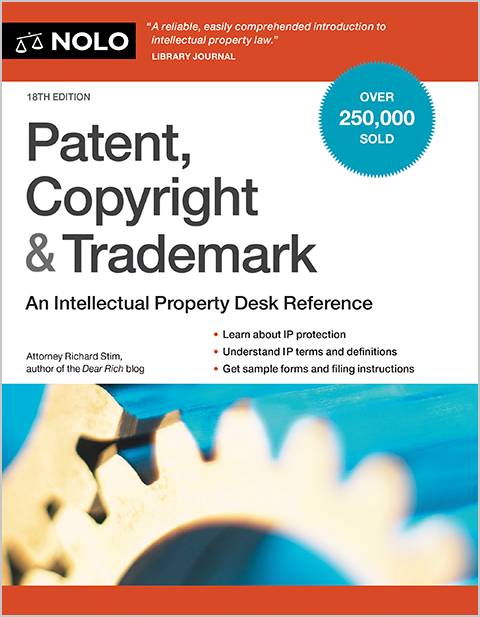
Patents, Copyright & Trademark
Get Professional Help
Talk to a Intellectual Property attorney.
How It Works
- Briefly tell us about your case
- Provide your contact information
- Choose attorneys to contact you
Copyright ©2025 MH Sub I, LLC dba Nolo ® Self-help services may not be permitted in all states. The information provided on this site is not legal advice, does not constitute a lawyer referral service, and no attorney-client or confidential relationship is or will be formed by use of the site. The attorney listings on this site are paid attorney advertising. In some states, the information on this website may be considered a lawyer referral service. Please reference the Terms of Use and the Supplemental Terms for specific information related to your state. Your use of this website constitutes acceptance of the Terms of Use, Supplemental Terms, Privacy Policy, Cookie Policy, and Consumer Health Data Notice.
Your Privacy Choices