Learn about your rights during police interrogations and arrests.
Updated 7/26/2022
Why Trust Us?
Fact-Checked
Nolo was born in 1971 as a publisher of self-help legal books. Guided by the motto “law for all,” our attorney authors and editors have been explaining the law to everyday people ever since. Learn more about our history and our editorial standards.
Each article that we publish has been written or reviewed by one of our editors, who together have over 100 years of experience practicing law. We strive to keep our information current as laws change. Learn more about our editorial standards.
If you watch legal dramas or read legal thrillers, you've no doubt come across scenes that involve police officers reading suspects their rights before questioning them. Or maybe you've been arrested yourself and have questions about the process. In this article, we'll answer your questions about what rights you have when you're arrested and how to assert them, what happens when the police violate your rights, and when it's time to speak with a lawyer.
In This Article
- If I'm arrested, do the police have to "read me my rights"?
- Will a judge dismiss my case if I was questioned without a Miranda warning?
- Can a police detective bring someone in for questioning without a warrant?
- What's the best way to assert my right to remain silent if I am being questioned by the police?
- How heavy-handed can the police get when asking questions?
- Can a person who is charged with a crime be forced to give bodily samples?
- I was pulled over at a roadblock and asked to wait and answer a police officer's questions. Is this legal?
- When do the police need a warrant to make an arrest?
- Should an arrestee ever give a statement to the police?
- Why it's best to speak with a lawyer before talking to the police
If I'm arrested, do the police have to "read me my rights"?
No. However, if they start questioning you but haven't read you your rights, they can't use anything you say as direct evidence against you at trial. What are these rights? Popularly known as the Miranda warning (ordered by the U.S. Supreme Court in Miranda v. Arizona), your rights consist of the familiar litany invoked by TV police immediately upon arresting a suspect:
- You have the right to remain silent.
- If you do say anything, what you say can be used against you in a court of law.
- You have the right to consult with a lawyer and have that lawyer present during any questioning.
- If you cannot afford a lawyer, one will be appointed for you if you so desire.
- If you choose to talk to the police officer, you have the right to stop the interview at any time. (This part of the warning is usually omitted from the screenplay.)
It doesn't matter whether an interrogation occurs in the jail, at the scene of a crime, on a busy downtown street, or in the middle of an open field: If you are in custody (deprived of your freedom of action in any significant way), the police must give a Miranda warning if they want to question you and use your answers as direct evidence at trial.
If you are not in police custody, however, no Miranda warning is required. This exception most often comes up when the police stop someone on the street for questioning about a recent crime and the person blurts out a confession before the police have an opportunity to deliver the warning. (To learn more about Miranda rights, see When Police Violate the Miranda Rule and Exceptions to the Miranda Rule.)
Will a judge dismiss my case if I was questioned without a Miranda warning?
Not necessarily. Many people mistakenly believe that a case will be thrown out of court if the police fail to give Miranda warnings to the arrested person. What Miranda actually says is that a warning is necessary if the police interrogate an in-custody suspect and want to use any responses as evidence. If the police fail to give you a Miranda warning, nothing you say in response to the questioning can be used as evidence to convict you. (There are exceptions, however.)
The "fruit of the poisonous tree" rule requires that courts suppress (exclude) evidence that comes from other, illegally obtained evidence. But it doesn't apply to Miranda in the way that it does to the Fourth Amendment. Physical evidence (drugs, for example) that police learn about because of a statement following a missing Miranda warning will often be admissible in court. (See If the Police Find Evidence Because of a Miranda Violation, Is the Evidence Inadmissible?)
Can a police detective bring someone in for questioning without a warrant?
Yes, police detectives can ask individuals to come down to the station (or meet somewhere else) for questioning. You don't have to be arrested or charged for a detective to interview you. If you voluntarily submit to the questioning, those answers can be used against you and the officer wasn't under any obligation to give you a Miranda warning—because you weren't in custody (you were technically free to leave and stop the interrogation at any time).
People who are uncertain about whether to talk to a police officer needn't feel trapped into giving an immediate "yes" or "no." Being confronted by a police officer tends to make many people nervous and anxious, which diminishes their ability to provide accurate information. A good alternative is to delay the interview by saying something such as, "I didn't expect this. I choose to remain silent now; perhaps I will talk to you another time." Among other things, the delay gives a person a chance to talk to a lawyer and perhaps have the lawyer present during the interview, if the person ultimately decides to talk
What's the best way to assert my right to remain silent if I am being questioned by the police?
If you're under arrest and you wisely choose to remain silent (at least until you have a chance to consult a lawyer), inform your interrogator of this decision. If you just keep your mouth shut and say nothing, the police can legally continue to question you, and if they do, you might eventually say something you later regret. (Somewhat ironically, the general rule is that you must speak up to claim your right to remain silent.)
You don't have to use a precise set of words to invoke your Miranda rights. After an officer gives you a Miranda warning, you can stop the questioning by saying something like:
- "I don't want to talk to you; I want to talk to an attorney."
- "I refuse to speak with you."
- "I invoke my privilege against self-incrimination."
- "I claim my Miranda rights."
In general, if the police continue to question you after you have asserted your right to remain silent, they have violated Miranda. As a result, anything you say after that point will not be admissible as evidence of guilt at your trial. (See Statements Obtained When Police Violate Miranda for more, including exceptions.)
How heavy-handed can the police get when asking questions?
Police officers are not allowed to use physical force or psychological coercion to get you to talk to them. The days of the rubber hose, protracted grilling under bright lights, and severe sleep deprivation are pretty much over. If police officers obtain information through any of these illegal means, the information can't be used by the prosecutor at trial. In addition, under the rule known as "the fruit of the poisonous tree," any evidence that the police obtain as the result of a coerced statement is equally inadmissible.
When deciding whether a confession is voluntary or involuntary, judges look at many factors, including:
- tactics used by the police
- the length of the interrogation
- whether investigators made false promises or threats, and
- the suspect's age, education, intelligence, and physical and mental conditions.
Can a person who is charged with a crime be forced to give bodily samples?
Yes. You might think that being forced to give bodily samples—such as blood, hair, fingerprints, or fingernail clippings—is a violation of the U.S. Constitution's protection against self-incrimination, found in the 5th Amendment. But the U.S. Supreme Court thinks otherwise. It has ruled that the 5th Amendment protects communications only, and that bodily samples are physical evidence and therefore not covered by the protection against self-incrimination.
I was pulled over at a roadblock and asked to wait and answer a police officer's questions. Is this legal?
Yes, as long as the police use a neutral policy when stopping cars (such as stopping all cars or stopping every third car) and minimize any inconvenience to you and the other drivers. The police can't single out your car at a roadblock unless they have good reason to believe that you've broken the law.
When do the police need a warrant to make an arrest?
Normally, as long as the police have good reason (called "probable cause") to believe that a crime has been committed and that the person they want to arrest committed the crime, they can make an arrest without asking a judge for a warrant.
However, a big exception to this rule exists. The adage "a man's home is his castle" rings true when it comes to arrests: The police must normally have a warrant to arrest a person at home.
Should an arrestee ever give a statement to the police?
You've never committed a crime in your life but the police, investigating some burglaries in your neighborhood, detain you while on your way home from a club late one night. You want to explain to the police what you were doing and clear this up. And, they say they want to talk to you. What's the downside to talking to the cops? In general, the downside is potentially huge and there is no upside for you.
Anything you say can be used against you
Every statement you make to police is evidence that can be used against you. You are essentially doing the work for the police and prosecutor to help them convict you. There is a reason every person arrested has a right to remain silent and to have an attorney present during questioning: to even the "playing field." A person who does not exercise these rights is standing alone, completely out-gunned, against a prosecutor with massive resources by comparison.
People under arrest often think that if they just deny everything, they will be helping their case. In fact, if the prosecution shows that just one part of what was denied was actually true, the defendant's credibility is damaged and the defendant's attorney will have a much harder time defending him.
Helping police make a case against you
At times, police will want to question a person because they don't believe they have enough evidence to even arrest him and they hope he will inadvertently give them enough information to support a charge.
By speaking to police, a suspect may also inadvertently give them grounds to press new charges against him. For example, a suspect who lies during an interrogation might be opened to a charge of obstruction of justice. Or a suspect who blurts out the names of other people involved in a crime might be charged with conspiracy. In some cases, a person's statement to police can lead to charges the cops had not previously thought of pressing even when the original charges that led to the arrest are dropped.
Why it's best to speak with a lawyer before talking to the police
Even an honest statement to the police by someone who's innocent can be a problem. For one thing, the statement might contain inadvertent inaccuracies or inconsistencies that the prosecution will later pounce upon.
A person under arrest rarely benefits by talking to the police. Instead, a person in that situation should assert the right to counsel, tell the police he wants to speak to an attorney, and then find a lawyer. An experienced criminal defense attorney will help the person deal with the police, the charges, and any trial.
In This Article
- If I'm arrested, do the police have to "read me my rights"?
- Will a judge dismiss my case if I was questioned without a Miranda warning?
- Can a police detective bring someone in for questioning without a warrant?
- What's the best way to assert my right to remain silent if I am being questioned by the police?
- How heavy-handed can the police get when asking questions?
- Can a person who is charged with a crime be forced to give bodily samples?
- I was pulled over at a roadblock and asked to wait and answer a police officer's questions. Is this legal?
- When do the police need a warrant to make an arrest?
- Should an arrestee ever give a statement to the police?
- Why it's best to speak with a lawyer before talking to the police
DIY Legal Tools from Nolo
Book & eBook
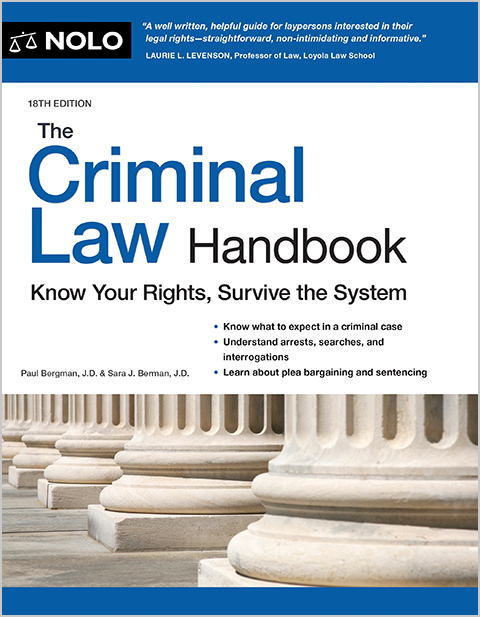
The Criminal Law Handbook
Book & eBook
Legal Research

Copyright ©2025 MH Sub I, LLC dba Nolo ® Self-help services may not be permitted in all states. The information provided on this site is not legal advice, does not constitute a lawyer referral service, and no attorney-client or confidential relationship is or will be formed by use of the site. The attorney listings on this site are paid attorney advertising. In some states, the information on this website may be considered a lawyer referral service. Please reference the Terms of Use and the Supplemental Terms for specific information related to your state. Your use of this website constitutes acceptance of the Terms of Use, Supplemental Terms, Privacy Policy, Cookie Policy, and Consumer Health Data Notice.
Your Privacy Choices